
Canton Fair Guide: Sourcing, Importing & Warehousing Tips
What to expect
- Why is finding the best supplier in China complicated?
- What does this mean for you as a business owner looking to import from China?
- The Canto Fair Expo
- Why do you need a warehouse for Import Business?
- Factors to Consider When Leasing a Warehouse/Godown in Kenya
- Should You Lease or Buy a Warehouse for Your Kenya Import Business?
- How Do You Calculate Warehouse Storage Costs and Protect Your Profit Margins?
- Break-Even Analysis
- 5 Common Mistakes Importers Make After Attending the Canton Fair and How to Avoid Them.
- Bottomline
Ever wondered how products are imported from China, remain affordable to the customer, and still profitable to the business owner? The secret is in finding a good supplier in China through the Canton Fair Expo. This Canton Fair sourcing importing and warehousing guide helps businesses understand the process of sourcing products directly from trusted manufacturers in China.
The business of finding the right suppliers can be exhausting and even frustrating. That is why having a reliable Canton Fair sourcing importing and warehousing guide is essential for importers looking to reduce costs and increase profits.
This is especially difficult with the emergence of agents and trading companies that propose to get you to the right suppliers for the right prices, only to offer marked-up prices. With the help of a proper Canton Fair sourcing importing and warehousing guide, businesses can avoid unnecessary middlemen and deal directly with manufacturers.
This, therefore, makes it necessary to get yourself to the manufacturer without the middlemen while using a trusted Canton Fair sourcing importing and warehousing guide to simplify the entire process.
Why is finding the best supplier in China complicated?
China is an industrial country with a hand in the manufacturing of almost everything you can possibly think of. This is why many businesses rely on a reliable Canton Fair sourcing importing and warehousing guide to connect directly with trusted manufacturers in China.
However, getting to these manufacturers so as to secure factory prices for the products you need might be harder than you think. A proper Canton Fair sourcing importing and warehousing guide can help importers navigate the complex Chinese market more efficiently and avoid unnecessary costs.
China’s manufacturing industry operates as a huge integrated and specialized ecosystem. Through a detailed Canton Fair sourcing importing and warehousing guide, businesses can better understand how the Chinese supply chain works and identify the best sourcing opportunities.
China’s ability to dominate global production lies in the division of the country into highly specialized regional industry clusters. This makes the Canton Fair sourcing importing and warehousing guide an important resource for businesses looking to source products strategically and competitively.
As a result, every product is manufactured within a specific province in the country, making a well-structured Canton Fair sourcing importing and warehousing guide essential for successful sourcing, importing, and warehousing operations.
What does this mean for you as a business owner looking to import from China?
For you to be able to find a product manufacturer, you first need to identify your product, locate its manufacturing hub/ province and city in China, and then find a supplier from thousands who specialize in that product. Only then can you start negotiating for prices.
For example, let’s say you want to start supplying electronics to both wholesalers and retailers here in Kenya.
You need to first identify the city in China where electronics are manufactured, then identify which electronics you want to sell, and then identify which manufacturers to work with before you can even start negotiating for prices.
Agents in China and even here in Kenya have identified this gap and therefore offer the service of helping you find your supplier at a cost, of course.
However, did you know that all this can be resolved by a single event that brings together all manufacturers in one location for a limited period of time?
You can use this event to get to all the manufacturers you need without having to go through agents or even city to city in an unfamiliar country.
This is the Canton Fair Trade Show that takes place twice every year. This year (2026), it is taking place in April and October.
The Canto Fair Expo
Due to the diverse manufacturing industry and the specialized ecosystem, China identified a need to bring together all manufacturers in China and connect them to customers from all over the world.
As a result, the Canton Fair Trade Show was born.
The Canton fair has been running since 1957 in Guangzhou, Guangdong, China.
Manufacturers sign up for the expo as exhibitors and are given enough space to set up their booths to showcase their products. Investors from all over the world also sign up as visitors and are given tickets that allow them to enter the exhibitions on the days they signed up for.
This allows them to connect and even network. Considering that the event is attended by different people from all over the world.
In addition to getting products, it is possible to network with other business owners from around the world.
Why does this matter to you?
In recent years, there has been an increase in China-owned stores in Kenya offering affordable products in stores that seem to house all sorts of products from decor to beauty products and even electronics and machinery.
As an investor, you already understand the Kenyan market, the purchasing power, and even habits. You have identified a product that works well in the country but is not produced within our borders.
The Canton fair expo hands you the opportunity to interact with manufacturers of that product, negotiate a price for yourself, and even make connections with other investors who may want to partner with you and expand the business to match or even surpass other outlets that already exist in the country.
The Canton Fair April Expo
Canton Fair runs in three consecutive phases, each lasting five days and covering specific product categories.
The Schedule for the April Event is as follows:
- Phase 1 (April 15th – April 19th)
The first phase will focus on electronics, electrical appliances, industrial machinery, Vehicles and, two wheels, lighting and electrical equipment, hardware, building machinery, and chemical products.
- Phase 2 (April 23rd – April 27th)
This will focus on housewares, gifts, and decorations, as well as furniture.
- Phase 3 (May 1st – May 5th)
Lastly, this phase will focus on children’s toys, clothes, and fashion-related items, and home textiles that include carpets and tapestries. Stationery, health, and recreational products, which may include medical devices, food, sports, travel, and recreation products, and personal care products, are also included in this category.
If you are looking to invest in manufacturing and construction equipment, phase one is the most relevant for you. However, if you are interested in importing household goods, hardware, and general merchandise for everyday Kenyan, then phases 2 and 3 would best suit your needs.
Attendance options
The Canton Fair allows for flexibility of attendance, where there is both virtual and physical attendance. However, if you are not just exploring and are serious about starting or growing your business, physical attendance is recommended.
By attending the fair, you can handle products, interact with manufacturers, and even review the quality of the products you are committing to. Some of these aspects are not possible with a virtual visit.
Find more information on this here
What Products Can Kenyan Importers Source at the Canton Fair?
As already seen, the Canton Fair is not a niche trade show. It covers every product category a Kenyan importer could need. Here is a breakdown of what Kenyan businesses typically source there:
Industrial Machinery and Manufacturing Equipment
- Milling machines and metalworking machinery
- Food processing equipment, including grain mills, juice extractors, and packaging lines
- Printing and packaging machines
- Construction equipment: excavators, compactors, concrete mixers
- Agricultural machinery: tractors, threshers, irrigation pumps
Consumer Goods for Kenyan Wholesale Markets
- Electronics: phones, laptops, accessories, and cables
- Household goods: cookware, plastic containers, furniture fittings
- Hardware: tools, fasteners, pipes, and fittings
- Textiles: fabrics, clothing, and school uniforms in bulk
- Solar equipment: panels, batteries, inverters, and charge controllers
Kenya’s growing middle class, expanding construction sector, and rising demand for renewable energy products make all of these categories highly relevant. The Canton Fair lets buyers compare dozens of competing manufacturers in the same hall in a single day.
How Do You Vet Suppliers and Negotiate the Best Deals at Canton Fair?
One of the biggest risks for first-time buyers attending the Canton Fair is dealing with trading companies or agents posing as manufacturers. These two add a markup of 15–40% on top of factory prices. As a result, this can affect your profit margins. Here is how you can protect yourself:
Supplier Verification
Ask for the supplier’s business license (yingyezhizhao) and export license to confirm they are a registered manufacturer
- Request to see their factory audit certificate or third-party inspection reports.
- Use Google Maps to verify the factory address matches the one on their documents
- Ask directly: “Is this your factory price or a trading company price?”
- Arrange a factory visit before you can commit to any purchase.
Negotiation Tactics
- Always negotiate in writing via email after verbal discussions on the fair floor.
- Request a proforma invoice with itemized unit costs and payment terms.
- Always order samples before committing to bulk; have samples shipped to you for quality inspection
- Compare at least three competing suppliers for every product before making a final choice
What Are the Steps in Importing Goods from China After the Canton Fair?
Once you have met the manufacturers, negotiated a price, and placed your orders at the Canton Fair, the work is far from over. The logistics chain from Guangzhou to your warehouse involves several critical steps that can make or break your profit margins. These include:
i. Production and Shipment Timeline
Most manufacturers require 15–45 days for production after receiving your deposit. Factor this into your planning, especially if you are importing for a specific season or project deadline.
ii. Freight Forwarding/ Shipping Options for Kenya
There are different shipping options for you as an importer, and they are all based on how urgent you need the products, your budget, and the size of the shipment. Here are some of the options:
- Sea freight (FCL — Full Container Load): This is the most cost-effective option when dealing with a large shipment.
- Sea freight (LCL — Less than Container Load): This is ideal for smaller shipments but costs more per cubic meter compared to FCL.
- Air freight: This is the fastest but most expensive of them all. It is best to use this for high-value, low-weight goods or urgent orders.
- Consolidation services: Several shipping companies also exist to help ship smaller packages by way of combining several shipments for different clients. They combine these packages to fill a container, then ship the products. On arrival, the companies then provide pick-up points and can also deliver the package to your doorstep.
Understanding International Commercial Terms (Incoterms) in the Importation Business
- FOB (Free on Board): Supplier delivers to Guangzhou port; you pay freight and insurance from there.
- CIF (Cost, Insurance, Freight): Supplier covers freight and insurance to Mombasa port; you handle clearance and inland transport.
- EXW (Ex-Works): You collect from the factory. This has the highest cost and complexity for the Kenyan buyer.
- DDP (Delivered Duty Paid): Supplier delivers to your Kenya warehouse. This is the most convenient for the Kenyan buyer but offers the least control over logistics.
iii. Customs Clearance in Kenya
All goods entering Kenya must clear through the Kenya Revenue Authority (KRA) at the Port of Mombasa or the Inland Container Depot (ICD) in Nairobi. Key requirements include:
- Bill of Lading from your freight forwarder.
- Commercial Invoice and Packing List from your Chinese supplier.
- Import Declaration Form (IDF) filed through the KRA eTrade platform.
- Certificate of Conformity (CoC) from the Pre-Export Verification of Conformity (PVoC) programme. This is mandatory for regulated products entering Kenya
- Payment of import duty (typically 0–25% depending on product category) and VAT at 16%
Although it is possible to do it alone, working with a licensed Customs Clearing Agent in Mombasa or Nairobi is highly recommended. They charge a modest fee and save you the trouble of penalties and delays that result from customs errors.
Importing products from China and clearing at the port is just half of the equation. The other half would be for you to get the products to the customers, making the whole process worthwhile.
Without a strategic warehousing plan, even the best sourcing decisions, strategies, and plans from the Canton Fair can become costly mistakes that dwindle your profit margins and frustrate your customers.
Why do you need a warehouse for Import Business?
Once in the country, large containers are offloaded at the ICD or Mombasa port. This takes time, and as the seller, you need a place you can put everything immediately before you can start fulfilling customers’ orders.
Remember, time is of the essence with customer order fulfilment. Here is why a dedicated warehouse or godown is not optional, especially for a growing business:
- Bulk purchase- With a huge space to store your products, you have the advantage of bulk purchase. As a result, this lowers your unit cost, which increases your profit margins while offering a competitive advantage over other sellers in the country.
- Inventory control- A structured warehouse allows you to track stock accurately, reducing losses from theft, damage, or unrecorded sales.
- Distribution efficiency- A centrally located warehouse in Nairobi and its environs allows same-day or next-day delivery to retail clients across the city as well as deliveries across the country.
- Risk reduction- Spreading inventory across one or two well-secured godowns reduces the impact of damage, fire, or theft on your entire stock.
- Seasonal demand planning- Almost all imported goods have strong seasonal demand peaks in Kenya. Having a warehouse allows you to purchase and pre-stock ahead of demand. Considering the shipping and processing time of containers, pre-stocking allows you to maximize profits by purchasing during the off-season, and pre-stocking before the season.
Factors to Consider When Leasing a Warehouse/Godown in Kenya
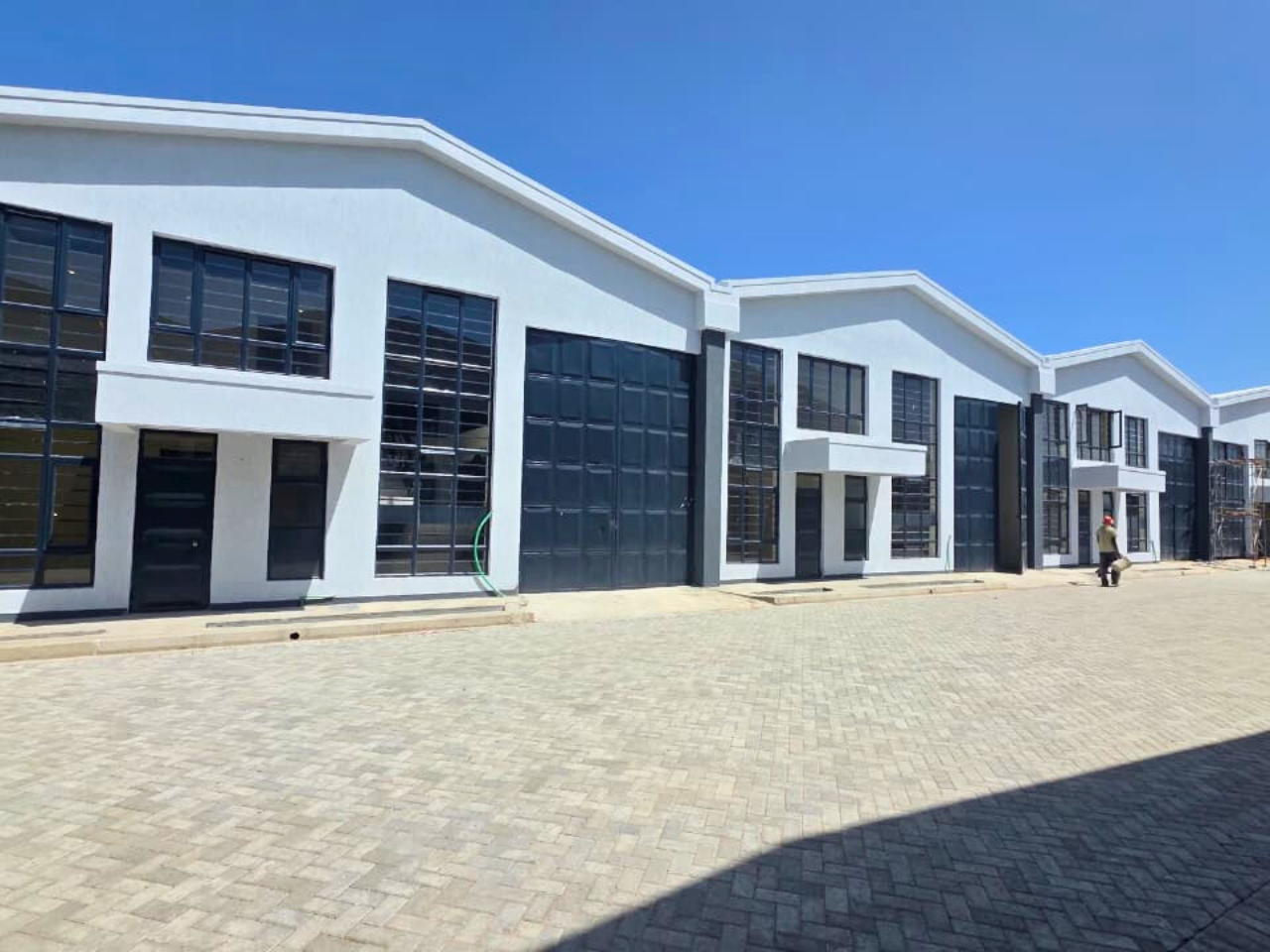
Not every godown on offer is fit for purpose. An importer dealing in machinery, electronics, or bulk consumer goods needs to evaluate warehouses against specific functional criteria before signing any lease. Among the key factors to consider are:
1. Location
Strategic locations near ports and highways are ideal for distributors as they are convenient to connect from the source to networked roads around the country.
The best warehouse locations in the Nairobi metropolitan area include:
- Mombasa Road (Industrial Area, Mlolongo, Athi River, Syokimau): These areas have direct access to the Standard Gauge Railway (SGR), ICD at Embakasi, and the A109 highway linking to Mombasa port
- Ruiru and Thika Road (Kiambu County): This is a growing industrial zone with excellent access to the Northern Corridor and lower rental rates than the Industrial Area
- Athi River and Machakos County: These are expanding logistics hubs with large-scale godown developments, affordable land, and proximity to the Eastern Bypass
- Kajiado County (Isinya, Kitengela): These are emerging warehousing zones ideal for distributors serving southern Nairobi and Kajiado County.
- Eastern Bypass Corridor (Ruai, Kamulu, Nairobi Gate): Conveniently connecting directly to the SG ICD at Embakasi. Your container from Mombasa can be in your warehouse the same day it is offloaded from the train.
- Babadogo and Ruaraka: This is Nairobi’s most accessible mid-city industrial hub. Rental rates are significantly lower than Industrial area, and there is an abundance of an affordable labor pool from the neighboring estates of Luckysummer, Allsops, Kariobangi, Roysambu, and Kasarani.
2. Structural Specifications
Warehouses are built on different requirements in terms of height and the capacity to hold. The following are some aspects in the structural specifications to look out for when searching for a warehouse.
- Clear height of at least 7–10 meters for racking systems and tall machinery storage
- Floor load capacity of at least 3–5 tones per square meter. This is essential for heavy industrial equipment from China.
- Wide column spacing (minimum 10–12 metres) to allow forklift and reach-truck operation
- Roller shutter doors with a minimum 4-metre clearance height for container offloading
- Level, reinforced concrete flooring without cracks
- Power supply for powering and testing machinery on-site
3. Security Systems
- 24-hour CCTV surveillance covering all internal and external areas
- Perimeter wall or fencing with controlled, gated access
- On-site security guard presence, especially overnight
- Strong-room or lockable cage areas for high-value goods
4. Fire Suppression and Safety
- Functional fire suppression system compliant with Nairobi City County or the county in which the warehouse is located, and Kenya Fire Brigade requirements.
- Clear emergency exits and well-maintained fire escape routes.
- Adequate ventilation for warehouses storing goods sensitive to humidity (electronics, textiles, solar equipment).
5. Loading Infrastructure
- Raised loading docks or dock levelers that align with lorry beds for faster, safer loading.
- Sufficient hard standing (paved yard space) for container trucks to maneuver and park.
Should You Lease or Buy a Warehouse for Your Kenya Import Business?
One of the most important strategic decisions a growing Kenyan importer faces is whether to lease a godown or invest in buying warehouse property. Both have merits and demerits, and the right answer depends on your business stage, capital position, and growth trajectory.
Leasing: Flexibility and Lower Upfront Cost
- Lower capital requirement: A lease requires only a deposit (typically 2–3 months’ rent) rather than the full purchase price of a property.
- Flexibility: Lease terms can be structured with break clauses, allowing you to upsize or relocate as your import volumes grow.
- Maintenance responsibility: In most Kenyan godown leases, structural maintenance is the landlord’s responsibility, reducing your operational burden.
- Speed: You can be operational in a leased godown within weeks; purchasing industrial property takes months of legal process.
Buying: Long-Term ROI and Asset Building
- Equity building: Every mortgage payment builds ownership in an asset that typically appreciates.
- Rental income potential: As your business grows and your warehouse needs change, you can lease portions of your property to generate passive income
- Cost certainty: No rent escalations as your occupancy cost is fixed to your mortgage terms
- Collateral value: Industrial property in Nairobi and surrounding counties is accepted as security by Kenyan commercial banks for further business lending.
For someone at the early to mid-growth stage, leasing is the more pragmatic starting point. Once your import volumes stabilize and you have a clear picture of your long-term space requirements, transitioning to ownership is more feasible then.
How Do You Calculate Warehouse Storage Costs and Protect Your Profit Margins?
Understanding your total warehousing cost is essential to pricing your imported goods correctly and protecting the profit margin you worked hard to negotiate at the Canton Fair.
Key Cost Components to Factor In
- Rent: Nairobi godown rental rates typically range from KSh 25 to KSh 80 per square foot per month, depending on location, specification, and lease term. Ruiru and Athi River tend to be on the lower end, while Industrial Area tends to be on the higher end.
- Service charge: Covers property management, security, garbage handling, and common area maintenance.
- Utilities: This includes electricity, water, and internet connectivity.
- Handling and labor: This covers loading, offloading, and stock movement costs.
- Insurance: Cargo and contents insurance for a fully stocked godown
- Forklift hire or ownership: If your goods are heavy, a forklift is essential.
Break-Even Analysis
To be profitable from the word go, do a simple break-even test.
- Take your total monthly warehousing cost (rent + service charge + utilities + labor) and divide it by the number of units you expect to move per month.
- The result is your warehousing cost per unit. Add this to your landed cost (Canton Fair price + freight + customs duty + VAT) to determine your true cost of goods.
- You can now apply a margin to the true total cost of goods. This will help you determine the exact profit to expect from each unit.
Most importers who skip this calculation often discover their margins have been eaten away by warehousing costs they underestimated at the planning stage.
5 Common Mistakes Importers Make After Attending the Canton Fair and How to Avoid Them.
1. Over-ordering without confirmed storage
The low unit prices at the Canton Fair can be exciting, deceiving you into buying more than your warehouse can hold. Before making any purchase, understand the capacity of your warehouse.
2. Skipping the certificate of Conformity (CoC)
For most regulated products, Kenya’s PVoC programme requires a CoC from an approved inspection body. Importing without it leads to goods being held at the port, demurrage fees accumulating, and potential rejection of the entire consignment. Before importing any product, research all the regulatory requirements and ensure you meet them.
3. Choosing a warehouse based on price alone
Choosing a warehouse based on price alone could end up being costly in terms of transport costs when getting the products to the customers. Additionally, it could cost you if the location is not secure. As mentioned earlier, consider all the possible factors before settling for one.
4. Underestimating customs and duty costs
Many importers budget for the Canton Fair price and sea freight, then forget to consider the Import Declaration Fees (IDF), customs duty, VAT, and port handling charges before committing to a sourcing price. Do in-depth research on everything before you commit to purchasing the product. Better yet, understand the fees applicable in the importation business before you can land at the Canton Fair. This way, you are grounded when negotiating prices for your products.
5. Skipping inspection before shipment
Paying for a pre-shipment inspection in China (typically USD 200–350 per inspection) is far cheaper than receiving a container of defective goods in Nairobi when you have already incurred all the costs involved in getting your shipment to the warehouse.
Bottomline
The Canton Fair is one of the greatest commercial opportunities available to Kenyan investors, entrepreneurs, and business owners. It gives you direct access to the manufacturers powering global trade. These are the same factories supplying multinational brands and are available to you at competitive prices with the right preparation and negotiation.
However, the businesses in Kenya that consistently profit from Chinese imports are not just good buyers. They are good planners. These businesses understand their logistics chain from Guangzhou to Mombasa or Nairobi. They also know their customs obligations before their goods arrive. Lastly, they have secured the right warehouse in the right location.
The end-to-end flow is straightforward when you treat sourcing and storage as a single integrated strategy:
- Prepare and plan before the Canton Fair — define products, budget, and target warehouse location.
- Source strategically at the fair — verify suppliers, negotiate terms, and collect samples.
- Manage logistics professionally — use a qualified freight forwarder and a licensed Customs Clearing Agent.
- Secure the right warehouse — Evaluate location, specification, security, and lease terms.
- Calculate your true landed cost — Include warehousing costs before setting your product price
- Scale intelligently — use your warehouse data to plan for future Canto Fair attendance.
Whether you are sourcing your first 20-foot container of machinery or scaling a multi-container import operation across several product lines, the right property partner makes a measurable difference.
Sadiamond Properties specializes in connecting Kenyan importers, distributors, and logistics businesses with the right commercial warehouse space across Nairobi and Kiambu counties.
Browse available godowns and warehouse listings, or contact the Sadiamond Properties team today at +254 703 677 451 or info@sadiamondproperties.co.ke to discuss your specific storage needs.